- the flow state
- Posts
- 010. On Anger


(n): a sense of fluidity between your body and mind, where you are totally absorbed by and deeply focused on something, beyond the point of distraction.
Inner Vibes 💌
Journal entry of a girl trying to find flow in the universe 🌍️
I was going to write this next newsletter on procrastination but guess what, I’m procrastinating on that topic 😂 Instead, something came to the forefront a bit more.
I started reading You Can Heal Your Life by Louise Hay - a classic that I’m sure many of you have heard of. She talks about “the list” - a long list of illnesses that can be directly attributed to emotional blockages. I was curious about the list and started looking through some of the things I’ve encountered (and still encounter). TMI on some of the stuff below but we’re all friends here right?
Knee pain - stubborn ego and pride, inability to bend, inflexibility, won’t give in
Anxiety - not trusting in the flow or process of life
Weight issues - oversensitivity, fear may be a cover for hidden anger
Cellulite - stored anger and self-punishment
Snoring - stubborn refusal to let go of old patterns
I mean between the anger and stubbornness I couldn’t help but be curious about how these two are interconnected. Of course, I had to go ask my therapist in a pocket, ChatGPT, its thoughts on the matter. It actually painted the picture pretty well. Anger and stubbornness are deeply connected, especially when anger is unacknowledged, repressed, or unresolved. Anger often arises to protect vulnerability—such as hurt, fear, shame, or feeling powerless. When this anger is internalized and held over time, it can harden into a fixed position or stance. Stubbornness can then become a defense mechanism to avoid feeling or showing that vulnerability again.
Stubbornness can even serve as emotional armor. If someone has been hurt or wronged, and hasn’t processed the anger fully, they may become fixed in their view or behavior, using stubbornness to avoid getting hurt again.

It’s interesting because I realized that anger was never an emotion I’ve welcomed into my life in a healthy way. As I did some reflection, I noticed that whenever I start to feel angry about something, I always shun it. Like it’s something bad, something to be hidden away. When I see or feel anger, I immediately try and put a stop to it. I remember countless times where the anger has bubbled up and I pushed it right back down. Why is anger so disregarded and repressed? I’ve come to find that it all has to do with what we learnt early on about how safe it is to feel or express it.

🌱 Early Conditioning: Anger Was Not Safe to Express
If you grew up in an environment where:
Anger was punished, mocked, or ignored
Caregivers became aggressive or withdrawn when you showed anger
You were praised for being “good,” “easy,” or “sweet”
Conflict was scary or explosive
…then your nervous system may have learned: “Anger = danger. Better to shut it down.” This isn't weakness—it’s adaptation. You learned to keep peace by suppressing your own fire.
🧸 Fear of Rejection or Abandonment
Children are biologically wired to preserve attachment at all costs.Unexpressed anger doesn’t vanish—it gets buried. Often under layers of sadness, resentment, or numbness. If expressing anger risked emotional disconnection, you may have learned to:
Swallow your feelings
Become a people-pleaser
Make yourself small or emotionally “invisible”
🛑 Unconscious Beliefs: Anger = Bad
Cultural, spiritual, or gendered beliefs can play a huge role. So you internalize the belief that anger makes you unsafe, unlovable, or “wrong.”:
“Nice girls don’t get angry.”
“If I get angry, I’m just like X person.”
“Anger causes people to leave.”
🧠 Blocked Identity: You Don’t See Yourself as Someone Who Gets Angry
Sometimes, you’ve become so identified with being:
Calm
Spiritual
Rational
Empathic
“Above” anger
…that you dissociate from anger completely. But anger is part of the full spectrum of human emotion. Not having access to it doesn’t mean it’s not there—it just means it’s buried or fragmented.
So, instead of repressing, what if we allowed anger to move through us in a healthy way? What actionable steps could one take? After doing some research, I feel like I’ve come up with a pretty good list.
🪨 Acknowledge That It’s There, Even if You Don’t Know the Source
You don’t need to remember everything to heal it. Anger (especially repressed) often shows up in other forms:
Irritability or snappiness
Passive-aggressive behavior
Deep stubbornness or resistance
Feeling emotionally “stuck” or blocked
Physical tension (jaw, neck, gut)
💬 Give It a Voice (Even If It’s Ugly)
This is huge. Anger needs expression—but not destruction. You might be surprised what comes up when you give it permission. You can:
Journal uncensored. Let your shadow speak. Rage on the page. Even if it makes no sense.
Speak it aloud when you're alone. Use phrases like:
"I'm furious that…", "I never got to say…", "How dare you…"Record voice memos you never plan to listen to. Just for catharsis.
🧘🏽♀️ Let the Body Move the Emotion
Anger lives in the body. This step bypasses the rational mind and helps subconscious emotions move. To move it:
Shake. Pound pillows. Scream into a towel.
Try somatic practices (like TRE: Tension & Trauma Releasing Exercises)
Dance like you’re possessed. No structure, no judgment.
Do breathwork—especially circular breathing (it often brings repressed emotion to the surface)
🧠 Work with Parts of You That Hold the Anger
This is where Internal Family Systems (IFS) or “parts work” comes in. Treat that part like a child needing your care. Give them voice, space, and validation. Ask:
“Is there a part of me that’s still stuck in a moment of injustice?”
“What age does this anger feel like?”
“What does this angry part need from me now?”
✍️ Ritual or Symbolic Release
When it feels right, create a ritual to release some of the weight:
Write angry letters you never send—and burn them.
Bury an object that symbolizes a memory or wound.
Scream into nature, or into water, or a pillow.
🌀 Repeat. Spiral Healing
This kind of emotional release isn’t linear. It spirals. You’ll revisit old layers in new ways as you grow—but each time you feel, express, and release… you free up more of your life force.
Anger doesn’t have to be the enemy. It’s a flare in the fark, showing us where our boundaries lie and where we need to shine our light. When we meet it with awareness rather than resistance, we turn stubborn heat into steady strength. And with every moment we pause, breathe, and choose our next step, we remind ourselves: the fire is ours to tend🔥.
Contemplations:
🧿 When was the last time you got angry? What did you do?
🧿 What truth is your anger trying to protect?
🧿 If you trusted anger as your teacher, what would it be there to say?
Wanderlust Gems 🏞️
Inspiring humans, art, history, nature, adventures and new discoveries 🚀
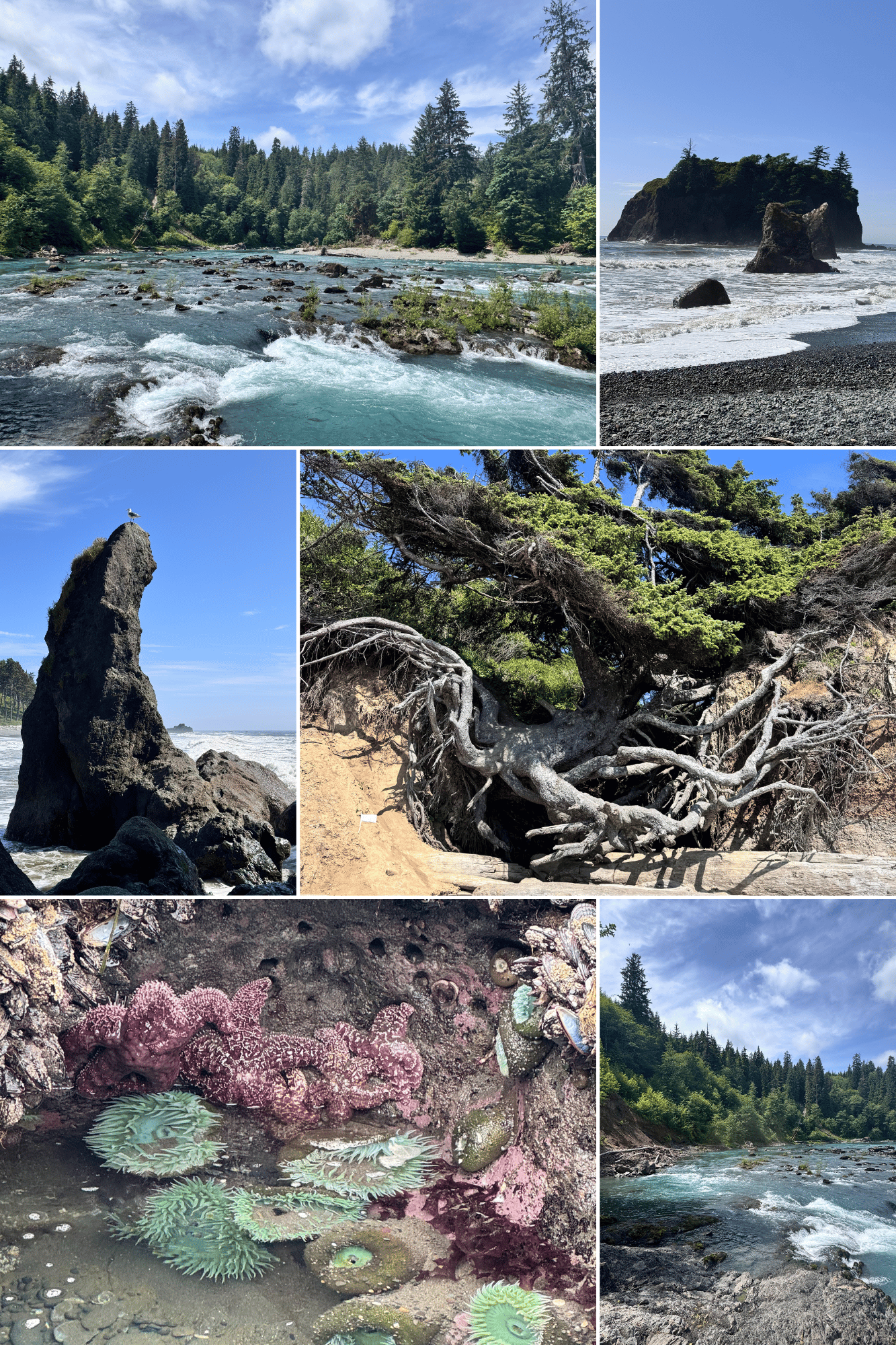
We spent 3 weeks in Washington and honestly, I wish I could have done more. Washington and California were the two states that I wasn’t ready to leave.
Washington locals were interesting and not necessarily what I would have expected. They were naturally outdoors-y, their default is to be in nature. That resonated with me deeply, as I know the community I’d like to be a part of, and one day build, will have those kinds of ideals. It was refreshing to be somewhere where everyone has a camper, they plan their weekends around hikes, and they’ve built businesses and centered their lives around supporting the mission of being connected to nature.
With this deep and profound love of their land, it makes many of the locals fiercely loyal to the environment around them. We got the sense that there was a subset of locals that were weary of newcomers/tourists. I’ve written about the dangers of travel tourism in one of my first newsletters about Scotland, so I completely understand where they’re coming from. They want to protect the environment around them - because of it’s absolute breathtaking beauty - and want others to respect it as well. Crystal blue lakes at every corner and deep lush forests in every direction, tidepools and beaches filled with sea-stacks, and snowy mountains with incredible wildlife, Washington is somewhere not to be messed with. Protected at all costs.
As I think about my next stage, I can’t help but try and look for projects and opportunities that can allow me to embody some of these principles. Working with nature, and showing others the stillness and sense of magic you can feel while being outside, is something I’m looking forward to. Having the opportunity to experience different ways to honor it during my travels has been the most wonderful gift.



High Resonance ✨
A song, podcast, author, movie, or book to keep you feeling that high resonance ✌️

Until next time! 👋
Reply