- the flow state
- Posts
- 006. On Rituals


(n): a sense of fluidity between your body and mind, where you are totally absorbed by and deeply focused on something, beyond the point of distraction.
Inner Vibes 💌
Journal entry of a girl trying to find flow in the universe 🌍️
Part of what I’ve loved about this adventure is that I don’t know where I’m going to be tomorrow, how long I’m staying and what my route looks like. We’re just doing what comes to us in the moment and that’s exactly what I wanted. I also have to be honest and say that I’m missing stability a bit! That feeling of maybe knowing just a little bit what tomorrow will look like 😁 Come on, I’m a sucker for SOME stability.

Just reminding you again
There are certain things that need to remain with you always. Especially when you’re traveling, going through a difficult time, or busy with work. There needs to be something constant that you can always do to ground yourself. I’ve found rituals to be that way for me. It’s essentially developing a devotional practice to yourself. Not to anything outside of you but to yourself. These rituals that I’ve incorporated into my daily routine help me feel grounded and remind me that home is always with me.

When looking at life through a polyvagal lens, we learn that our autonomic nervous system is constantly scanning for cues of safety or threat - whether we’re aware of it or not. At any given moment, our body is reacting to its environment, shaping how we feel, think and act. As you might have guessed, we operate at our best when we’re rooted in safety. Safety isn’t about the absence of risk; it’s about having the stability to meet life’s uncertainties with grace and strength. And that stability comes from the rituals we create.

One of the most interesting insights I took from the book Atomic Habits, is the importance of consistency. Even if it means adapting your rituals, it’s crucial to keep going. The compound effect matters, and showing up matters. And if you skip one day or week, be kind to yourself, quick to forgive, and get back on track.
I started off by writing down the things I could incorporate into my daily routine that tell my body I’m safe. Ideally, these things would be done in the morning before you begin your day, but as long as you have a predictable set of tools you can rely on to reconnect with your sense of safety - you can do it anytime!
Here’s a small exert of what I like to do before picking up my phone and starting my day:
🔥Light a candle, incense or sage : There’s something about the smell that signals to my brain that my practice is beginning.
🤲 5-10 minute Meditation: I try and dedicate at least a few minutes every morning to clear my head and set intentions. My favorite app is Waking Up (more esoteric talks and meditations) but I’ve also tried Headspace and Calm and found that both provide a great space to begin (I probably lean a bit more towards Headspace with it’s friendly animations). Even Youtube has free meditation resources.
☕️Make coffee/tea: The art of making coffee or tea can really help ground you. Especially if you enjoy trying different blends and brands. It adds a little something to your morning. I add Golden Sunmilk (a turmeric based blend) by Anima Mundi to every cup.
✍️ 3 pages of free flow journaling: I started doing this as part of The Artists Way (a book I linked to in a previous newsletter). I’ve found that the journaling is like a data dump. I’m able to get all my thoughts and anxieties on paper and TRY (lol) not to think about them during the day.
🧘 Optional activities: When I have more time in my morning or day, I like to incorporate something that moves my body. It could be a simple Yoga flow, basic stretching, or a walk.

That’s it, the routine doesn’t have to be long or extensive, it’s just something that makes you feel like you’re winning before you start your day. None of these rituals are groundbreaking, but together, they create a rhythm that reminds my nervous system: You’re okay. You’re safe.
What’s beautiful about this idea is personalizing it! What nourishes you will be different from the next person. Some people choose to pray every morning, others might take a dip in the ocean, and some might do morning affirmations. The key is figuring out what brings you peace and leaning into those practices intentionally.
Here are some steps to get you started:
Notice what brings you ease
Start small
Be consistent
Don’t be hard on yourself if you don’t do it every day
Your morning rituals might seem small, but they carry the power to transform how you show up each day.

Contemplations:
🧿 What do your rituals look like?
🧿 What bring you the most peace?
🧿 What are some activities you can tap into when you need to feel safe?
Wanderlust Gems 🏞️
Inspiring humans, art, history, nature, adventures and new discoveries 🚀
After arriving to New Mexico post southeast states, I have to say it felt like a breath of fresh air from a nature perspective. The rolling hills, the bright sun, the sand dunes, the tall trees and crisp air in the forests, New Mexico is a surprisingly diverse ecosystem.
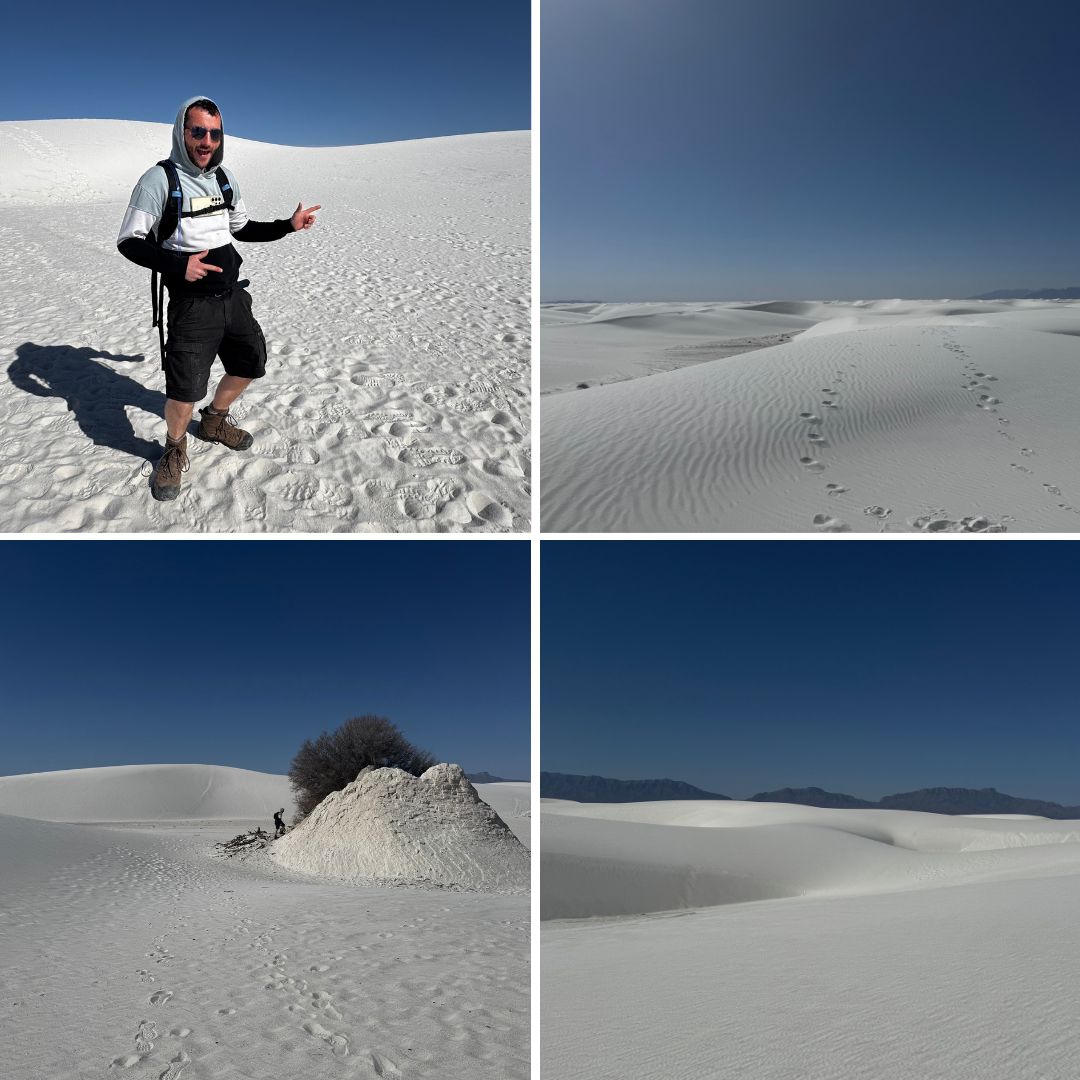
I’m not sure many people from the East Coast realize the beauty and history of this ancient land. I had spent time in Santa Fe (NorthWest - Google list HERE) before, but this was our chance to explore the South. We spent time in quirky Roswell (which honestly was hilarious in so many ways), hiked the dunes of White Sands National Park, got lost in the Lincoln National Forest, and explored the Gila Cliff Dwellings in the Gila National Forest. We rounded out our time by camping at the Cosmic Campground which is an official Dark Sky Sanctuary and promised some incredible Milky Way views.
The history is what continues to amaze me. The stories of heroes, courage, struggle and perseverance of the indigenous tribes of the land would bring anyone to tears. For thousands of years, New Mexico was home (and is still home) to numerous tribes including:
Puebloans (such as Toas, Zuni, and Acoma): Known for their adobe dwellings and advanced agriculture
Navajo (Diné): A powerful semi-nomadic people with strong tradition in weaving and livestock herding
Apache (Mescalero, Jicarilla, and Chiricahua): Fierce warriors and hunters, known for their resistance against Spanish and American colonization.
Ute: Skilled hunters and traders who lived in the northern regions
Comanche: Nomadic horse riders who dominated the southern plains, including parts of eastern NM.
It’s been incredible diving into the rich history and if anyone has any recommended books - please email me as I’d like to continue expanding my knowledge!!
I could have spent another month exploring New Mexico, but we needed to keep on trucking. All I can say is thank you to this land for allowing us to come and explore it’s history and people. I couldn’t recommend it more.
New Mexico Google list HERE includes all the spots we hit up in the South + a few bookmarks in the North.
What Sands National Park
Gila Cliff Dwellings

Gila National Forest

Cosmic Campground& Catwalk Recreational Area

Roswell - Google list HERE

High Resonance ✨
A song, podcast, author, movie, or book to keep you feeling that high resonance ✌️
This week’s book recommendation is none other than Braiding Sweetgrass by Robin Wall Kimmerer. I read Braiding Sweetgrass a few months before embarking on this journey and I couldn’t recommend it more. It was actually my first Spotify Audiobook and I felt I was able to get through it a lot quicker than if I read it.
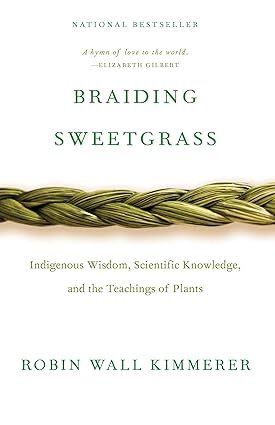
While not specifically about Southwestern tribes (the author is a citizen of Potawatomi Nation) the book illustrates the deep indigenous cultural understanding that all humans, plants, animals, and even the Earth itself, are part of a unified living system. This interconnectedness means that harm to one part of the ecosystem affects another, including humans. It’s a poetic blend of indigenous spirituality, ecology, and storytelling and what has fueled my continued interest in environmental restoration and developing a reciprocal relationship with nature.
In the book, the author introduces the concept of the “Great Harvest” as part of indigenous teachings on reciprocity, gratitude, and sustainable relationship with the land. The idea reflects the balance between taking and giving, ensuring that harvesting from nature is done with respect and care so that life continues to flourish for future generations.
The Great Harvest
🌳 Know the ways of the ones who take care of you so that you may take care of them
🌲 Introduce yourself
🌿 Be accountable as the one who comes asking for life
🍁 Ask permission before taking
🥬 Abide by the answer
🌳 Never take the first
🌲 Never take the last
🌿 Take only what you need
🍁 Take only that which is given
🥬 Never take more than half
🌳 Leave some for others
🌲 Harvest in a way that minimizes harm
🌿 Use it respectfully
🍁 Never waste what you have taken
🥬 Share
🌳 Give thanks for what you have been given
🌲 Give a gift in reciprocity for what you have taken
🌿 Sustain the ones who sustain you and the Earth will last forever
Until next time! 👋
Reply